
Please note: This is an Imperfect Plant
Our Imperfect Plants are healthy and ready to grow, but they show a little more character than those in our main range. These plants may have some cosmetic quirks such as old pest damage, slight browning, twisted or stunted growth, or a few damaged leaves. None of these issues affect their long-term health, and every plant is checked by our team to ensure it’s rooted and ready to thrive in your care.
By choosing an Imperfect Plant, you’re giving a perfectly good plant a second chance. It’s a simple way to grow your collection while helping us reduce waste and make our production more sustainable. Each one is unique, with its own story and charm, perfect for anyone who values growth in all its forms.
Due to the nature of these plants, Imperfect Plants are not eligible for exchanges or refunds.
Anthurium regale is a large-leaved aroid native to the Peruvian Andes, primarily found in cloud forests at mid to high elevations. This species is prized for its broad, velvety, heart-shaped leaves that can reach over 90 cm in length. The deep green foliage is characterised by prominent, pale silvery-white veins that create a striking contrast against the matte leaf surface. New leaves typically emerge in a bronze or reddish tone, gradually deepening to green as they mature. The plant grows in an upright, clumping habit with each leaf supported on long, rigid petioles.
Due to its epiphytic and hemiepiphytic tendencies in the wild, Anthurium regale prefers airy conditions around its roots and requires high humidity to maintain leaf quality. Its impressive foliage size and need for consistent indoor warmth make it better suited for growers who can maintain stable environmental conditions.
Native to:
Cloud forests of the Peruvian Andes, particularly in the regions of Huánuco and San Martín. It is typically found at elevations between 1,200 and 2,000 metres.
Water:
Allow the top 1/3 of the potting mix to dry out between waterings. Water thoroughly when required, ensuring excess water can drain freely to prevent root rot. Reduce watering frequency slightly during winter months when growth slows.
Light:
Requires bright, indirect light. Direct sunlight should be avoided as it can scorch the foliage. A position near an east- or north-facing window, or slightly shaded from a south-facing window, is ideal.
Humidity:
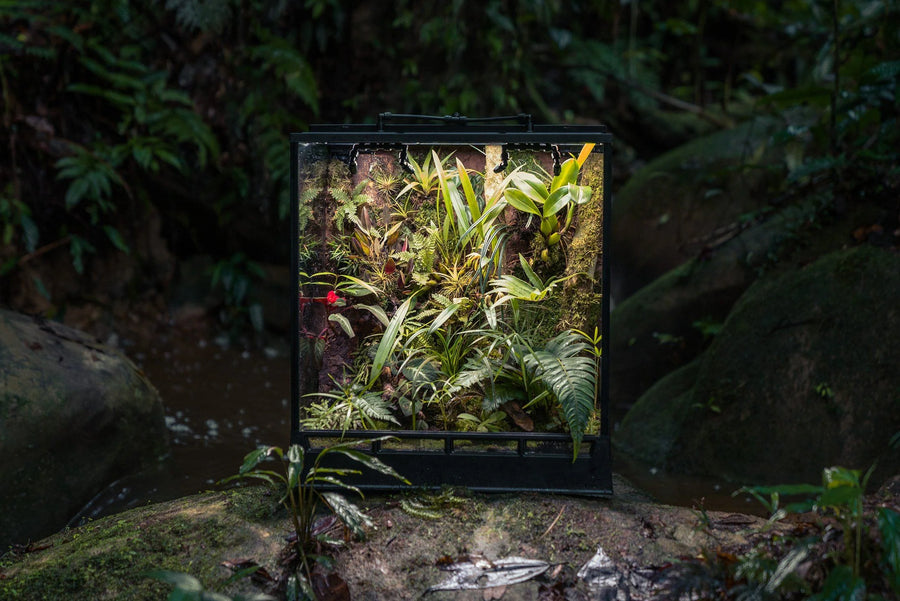
Prefers high humidity, ideally between 70–80%. Consistent humidity helps prevent leaf browning and encourages larger leaf development. Its humidity needs make it suitable for tent or cabinet environments indoors.
Temperature:
Requires stable temperatures between 18–27°C. Avoid exposure to temperatures below 15°C. Protect from cold drafts and sudden temperature fluctuations, especially during winter.